Screw vs. Belt vs. Drag Conveyor: Which Is Right for Your Facility?
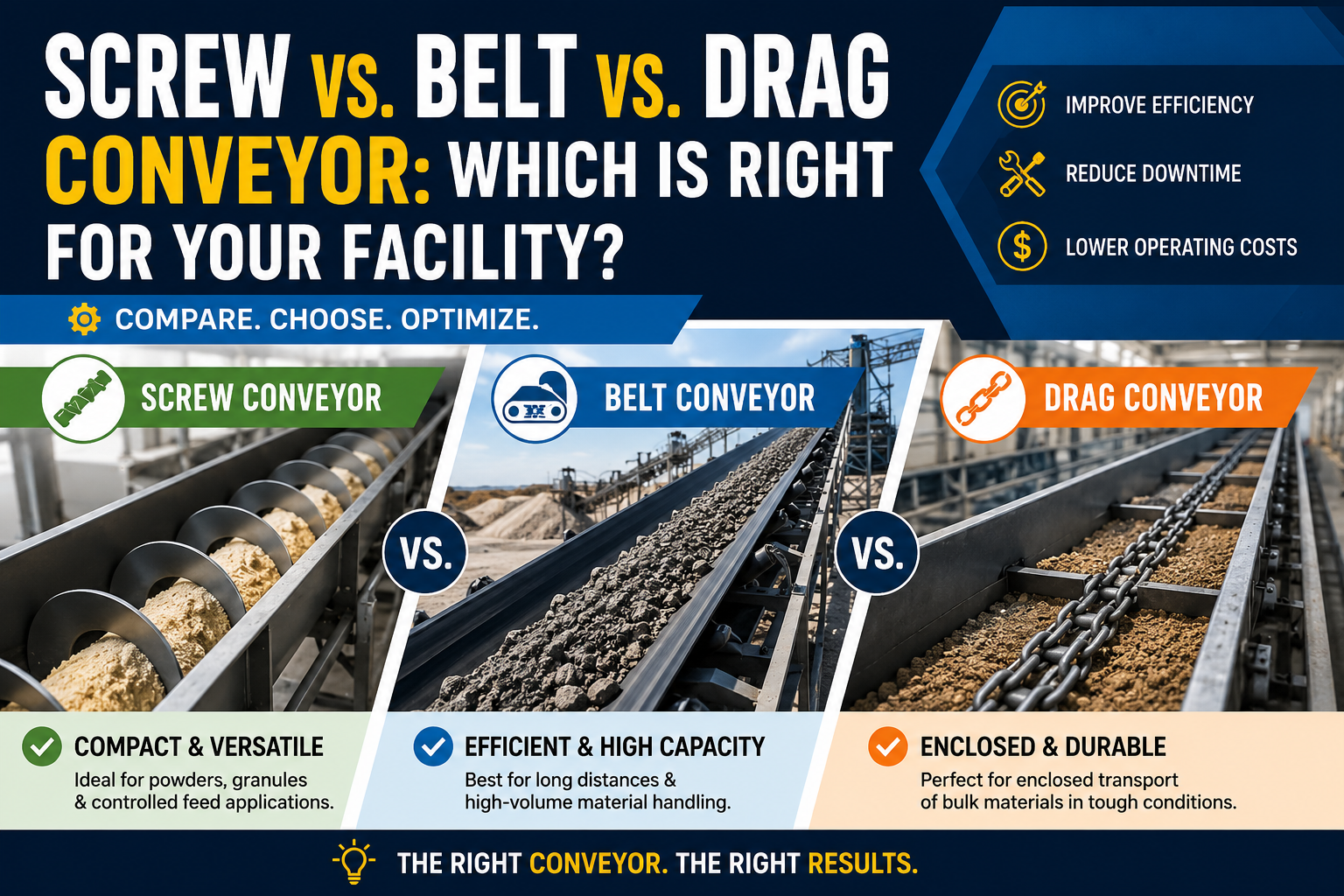
The choice of conveyor may prove crucial in terms of material flow, production efficiency, maintenance, and costs. Though there are many kinds of conveying devices, there are still several types widely used for conveying bulk materials in an industrial plant.
Different operating principles of the conveyors make some conveyors more appropriate for different materials, layouts, capacity requirements, and process needs. Knowing the features of each kind of conveyor will assist in selecting the Complete Conveyor Systems.
For conveying any material, from powder to aggregates to waste material and others, the proper conveyors must be chosen depending on the application rather than on the price factor.
What Are Complete Conveyor Systems?
A Complete Conveyor System refers to an entire system for material handling which is designed to facilitate movement of material in one or more stages within a facility. A complete system looks at a conveyor not as a single machine but rather as a process involving loading, transportation, unloading, controls, safety, and integration with other machines.
In some applications, a complete system will involve different conveyors used in tandem with each other.
This means, for instance, that in one plant there may be a belt conveyor used for horizontal conveying, a drag conveyor for transporting material in a process stage, and finally a screw conveyor feeding another machine.
The idea is to achieve a seamless flow of materials.
Screw Conveyors: Compact and Versatile
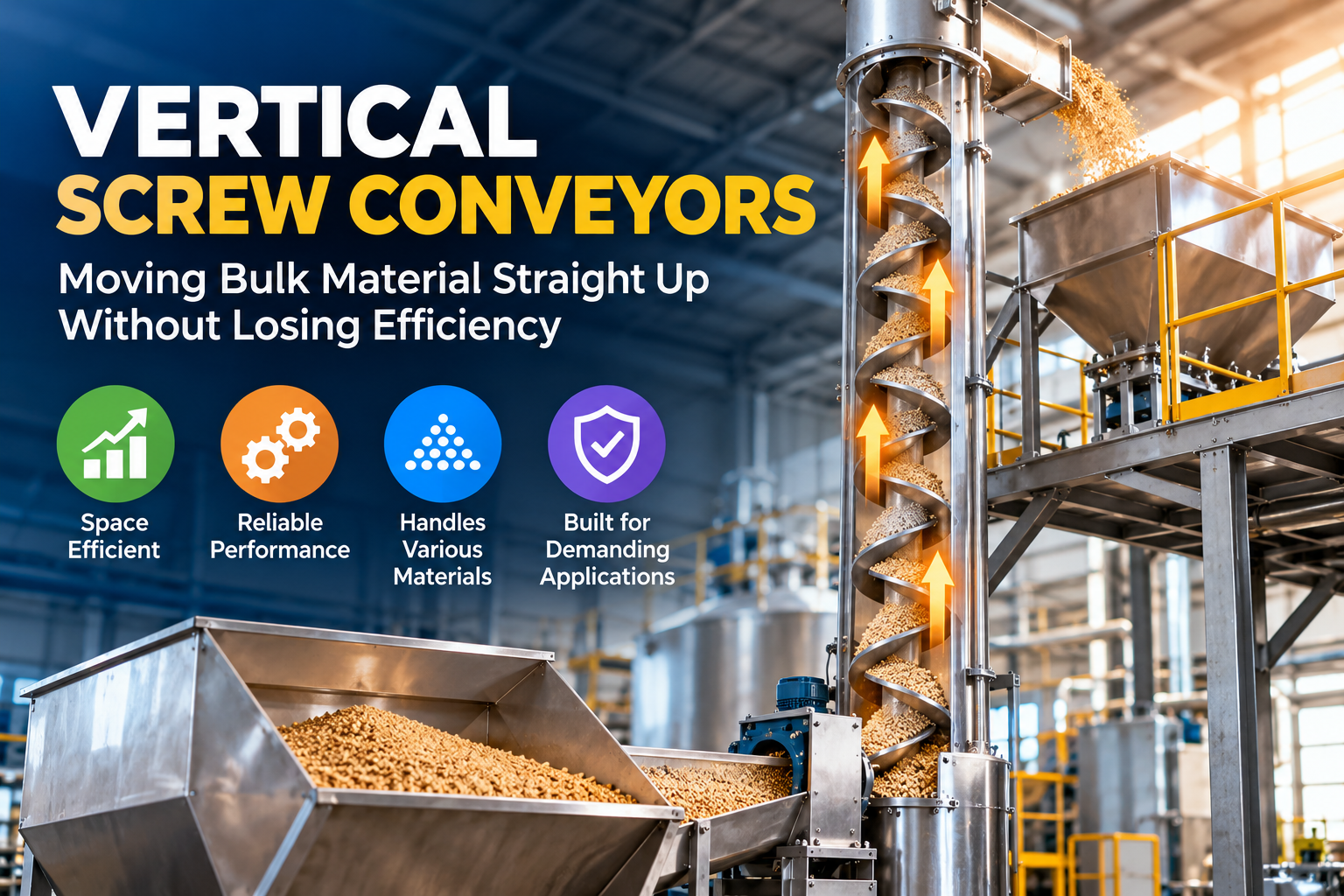
Screwconveyors operate by using a helical-shaped screw or flighting to transport bulk materials within a trough or an enclosed chamber. They are particularly effective for materials such as powders, granular substances, grain, sludge, and similar types of bulk material.
The primary benefit offered by screw conveyors relates to their capacity for adaptation for different purposes.
Advantages of Screw Conveyors
Screw conveyors can offer several benefits:
- Compact design
- Enclosed material handling
- Controlled material flow
- Ability to handle many bulk materials
- Relatively simple mechanical design
- Potential for mixing or conditioning during conveying
- Flexible inlet and discharge configurations
They can also be customized for specific material characteristics and process requirements.
When Should You Choose a Screw Conveyor?
In case of lack of space or the need for controlled transportation of powdered substances, granular substances, or other bulk materials, a screw conveyor may be the right choice.
The use of screw conveyors is especially beneficial in those cases when the conveyor not only transports but performs some additional functions, such as feeding or discharge of the material.
Nevertheless, this type of conveyor may not be the best option for all applications related to long distances or large capacities; therefore, when selecting the equipment, it is necessary to take into account such aspects as properties of the transported material, length of the conveyor, speed of its work, and its capacity.
Belt Conveyors: Efficient for Long-Distance Transport
Belt conveyors use a continuous belt to carry material from one location to another. They are widely used in manufacturing, mining, agriculture, recycling, food processing, and bulk material handling.
A belt conveyor can transport materials horizontally or at an incline, depending on the design and material being handled.
Advantages of Belt Conveyors
Belt conveyors are often selected for:
- Long-distance conveying
- High-volume material movement
- Continuous operation
- Horizontal and inclined transport
- Integration with automated systems
- Handling a broad range of material types
Because the material rests on the belt surface, belt conveyors can provide smooth and continuous movement.
When Should You Choose a Belt Conveyor?
Belt conveyors could be suitable in situations where a plant requires transporting large volumes of material over a considerable distance.
These are also suitable where there is a need for flexible conveyor routing due to layout within the plant. The belt conveyor system can be arranged depending on the situation using various belt widths, speeds, supports, and discharges.
For abrasive and heavy-duty cases, special equipment would be needed.
Drag Conveyors: Built for Enclosed Bulk Material Transport
Drag conveyors, sometimes called drag chain conveyors, use chains fitted with flights or paddles to pull bulk material through an enclosed housing.
Unlike a belt conveyor, which carries material on a moving belt, a drag conveyor pushes or drags material along the bottom of the conveyor housing.
This design can be particularly useful for applications where enclosed material handling is important.
Advantages of Drag Conveyors
Drag conveyors can provide:
- Enclosed material transport
- Effective handling of bulk materials
- Durable operation in demanding environments
- Flexible horizontal and inclined configurations
- Multiple inlet and discharge possibilities
- Reduced material exposure during conveying
They are often considered for applications involving grains, wood products, biomass, ash, and other bulk materials.
When Should You Choose a Drag Conveyor?
A drag conveyor can be a strong option when the material needs to remain enclosed during transport or when the application involves heavy-duty bulk handling.
Their robust construction can make them suitable for industrial environments where durability is a major consideration.
Factors to Be Taken into Account When Selecting a Conveyor
Making a choice among screw, belt, and drag conveyors requires an analysis of the application details.
1. Features of the Material
It is necessary to know the material in question. Is it dry, powdery, granular, sticky, abrasive, wet, fragile, or free-flowing?
Features of the material might indicate that one conveyor type is much more preferable than others.
2. Required Capacity
Determine the amount of material that needs to be conveyed per hour. The conveyor shall be designed to have the specified capacity, without incurring unnecessary expenses.
3. Distance of Conveying
Distance from the point of loading to the point of discharge is a crucial factor. Belt conveyors might be especially effective at long distances, while screw or drag conveyors might be more suitable for short distances.
4. Design of the Facility
The amount of available floor space, ceiling height, other equipment, and points of transfer can influence the selection of the conveyor.
A good design for one facility might not be the best choice for another due to different layouts of facilities.
5. Environment
Temperature, moisture, dust, chemicals, abrasion, and exposure to the elements are environmental factors to be considered when selecting the equipment.
For food and pharmaceutical applications, specific hygiene requirements may be added.
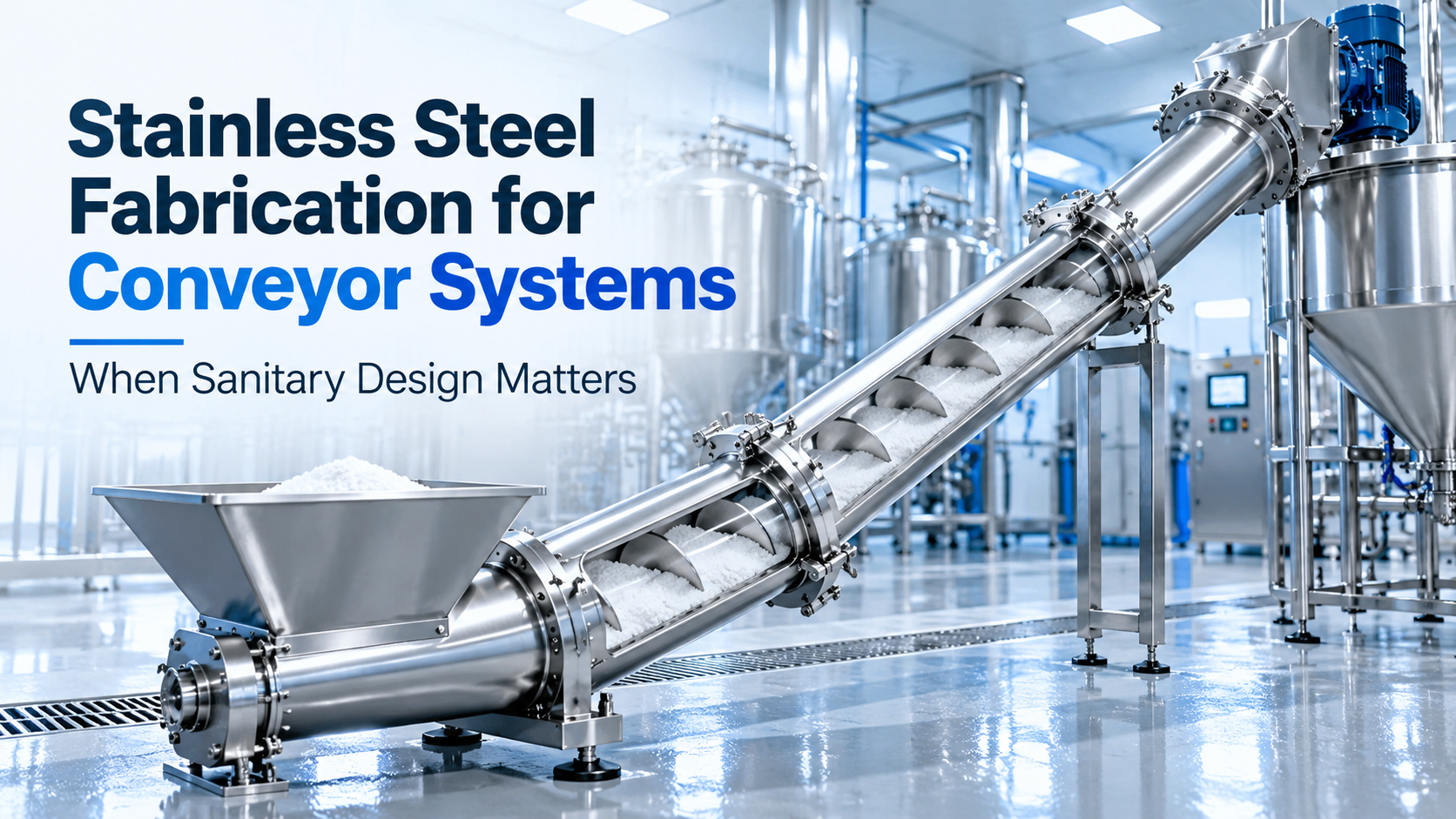
Sanitary Conveyor Systems for Hygienic Applications
In industries where cleanliness is very important, it is essential to take extra design factors into account when creating sanitary conveyor systems. Food processing, beverage production, medicine manufacturing, and similar industries may require equipment designed specifically to minimize contamination and make cleaning easier.
The choice of construction materials, surfaces, access to components, the conveyor design, and how to clean it can affect its level of sanitation.
Thus, a proper conveyor technology needs to be chosen depending on the hygiene requirements of the facility.
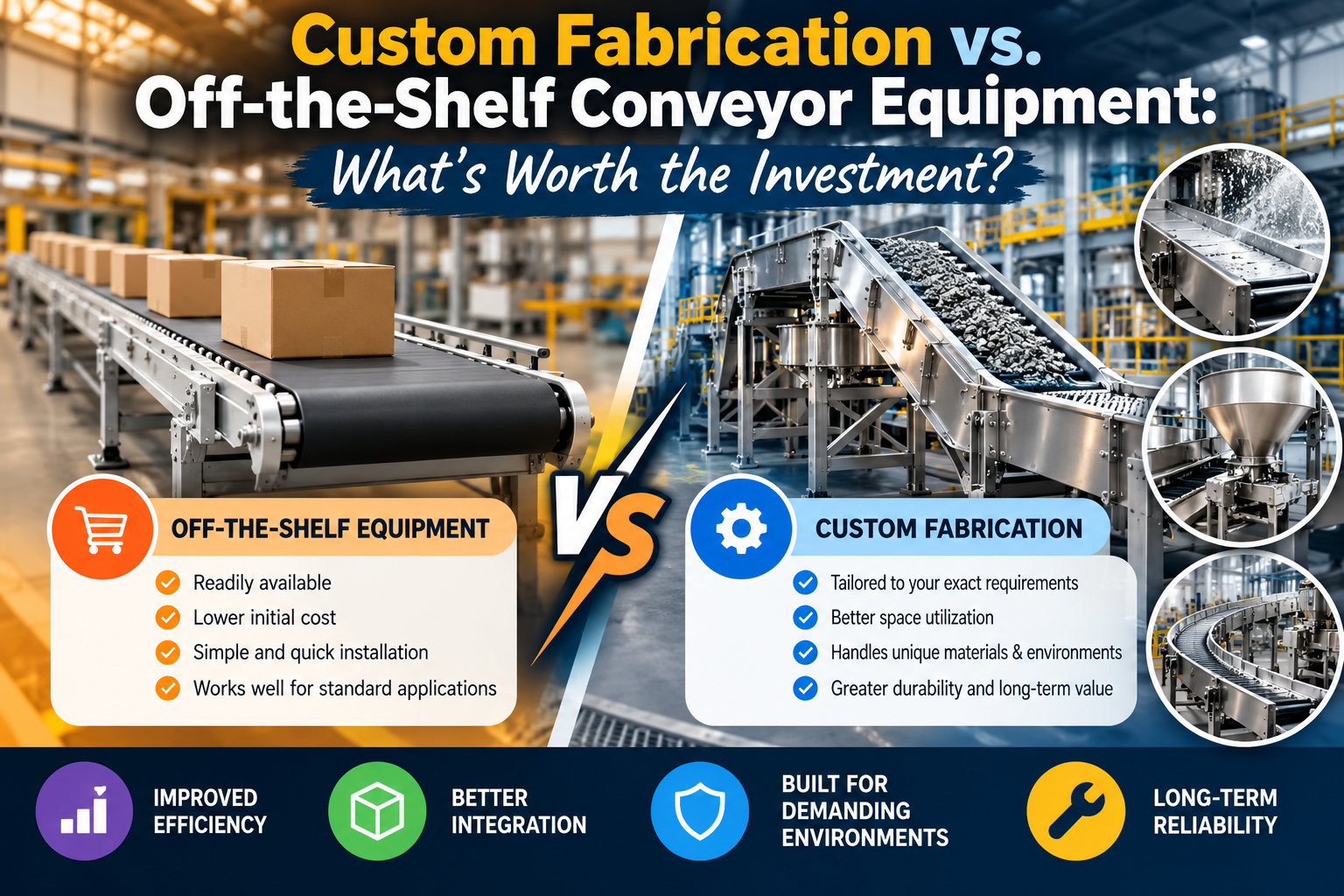
Custom Material Handling Systems
Not every facility can use an off-the-shelf conveyor arrangement. Custom Material Handling Systems can be designed around specific material properties, production rates, equipment locations, and building constraints.
Customization may include:
- Conveyor dimensions
- Inlet and discharge locations
- Conveyor length
- Incline or decline
- Drive configuration
- Construction materials
- Specialized flights or screw designs
- Controls and automation
- Integration with existing equipment
A custom approach can be particularly valuable when several conveying technologies need to work together as one coordinated system.
Working With a Conveyor System Manufacturer
An experienced Conveyor System Manufacturer can help evaluate the complete application before recommending equipment. This is important because conveyor selection involves more than choosing between screw, belt, and drag technology.
The manufacturer should consider material properties, throughput, conveyor distance, elevation changes, environmental conditions, maintenance requirements, and integration with other equipment.
For facilities with specialized requirements, manufacturers can also develop Custom Conveyor Systems rather than forcing the application into a standard configuration.
Conveyor System Installation Matters
A conveyor that is well-designed will not necessarily give good results if not installed properly. There are various factors that should be considered when installing a conveyor system, including alignment of machinery, supporting structure, belt/chain tension, drive arrangement, transfers, and safety systems.
After installation, it is vital to conduct periodic inspection and maintenance in order to maintain system efficiency. This includes checking bearings, belts, chains, pulleys, idlers, flights, and drive systems in line with the equipment manufacturer's guidelines.
How to Choose the Right Conveyor for Your Facility
There is no single conveyor that is ideal for every application.
Choose a screw conveyor when you need compact, controlled conveying of powders, granules, or other bulk materials.
Choose a belt conveyor when long-distance or high-volume continuous transport is a priority.
Choose a drag conveyor when enclosed, durable bulk material transport is required.
In more complex facilities, the best solution may actually be a combination of all three.
Conclusion
The process of determining whether a screw, belt, or drag conveyor is best begins with what kind of materials you are transporting, what your capacity requirements are, what the layout of your facility is, and which regulations apply to your operations. Different conveyor capabilities may be used for the purpose.
For facilities with complex requirements, Complete Conveyor Systems can combine multiple conveyor technologies into an integrated solution. Whether you need Industrial Conveyor Systems, Custom Conveyor Systems, or sanitary conveyor systems, working with an experienced Conveyor System Manufacturer can help ensure that equipment is appropriately designed, installed, and integrated.
The right conveyor is not simply a machine for moving material it is an important part of your overall production process. By selecting equipment based on the specific application and considering the entire system, facilities can create safer, more reliable, and more efficient material-handling operations.
Find the Right Conveyor System for Your Facility
Not sure whether a screw, belt, or drag conveyor is the best fit for your operation? Get expert guidance based on your material, capacity, layout, and process requirements.
Contact an experienced conveyor system manufacturer today to discuss your application and explore a custom material handling solution. Contact Us