What Is a Bucket Elevator? A Guide to Vertical Material Handling
The task of moving bulk materials vertically can be difficult in an industrial plant where there is little room on the ground and processes involved require a means of transporting bulk materials from one level to another. Bucket Elevators offer an ideal solution to this problem since the materials are transported vertically in buckets that move in a chain or belt.
Applications in agriculture, the food industry, minerals processing, the chemical industry, cement, and manufacturing are just some of the industries that use bucket elevators to move all manner of bulk materials from one place to another.
There is a need to understand how bucket elevators function and the types of systems that one can adopt depending on one's needs.
What Is a Bucket Elevator?
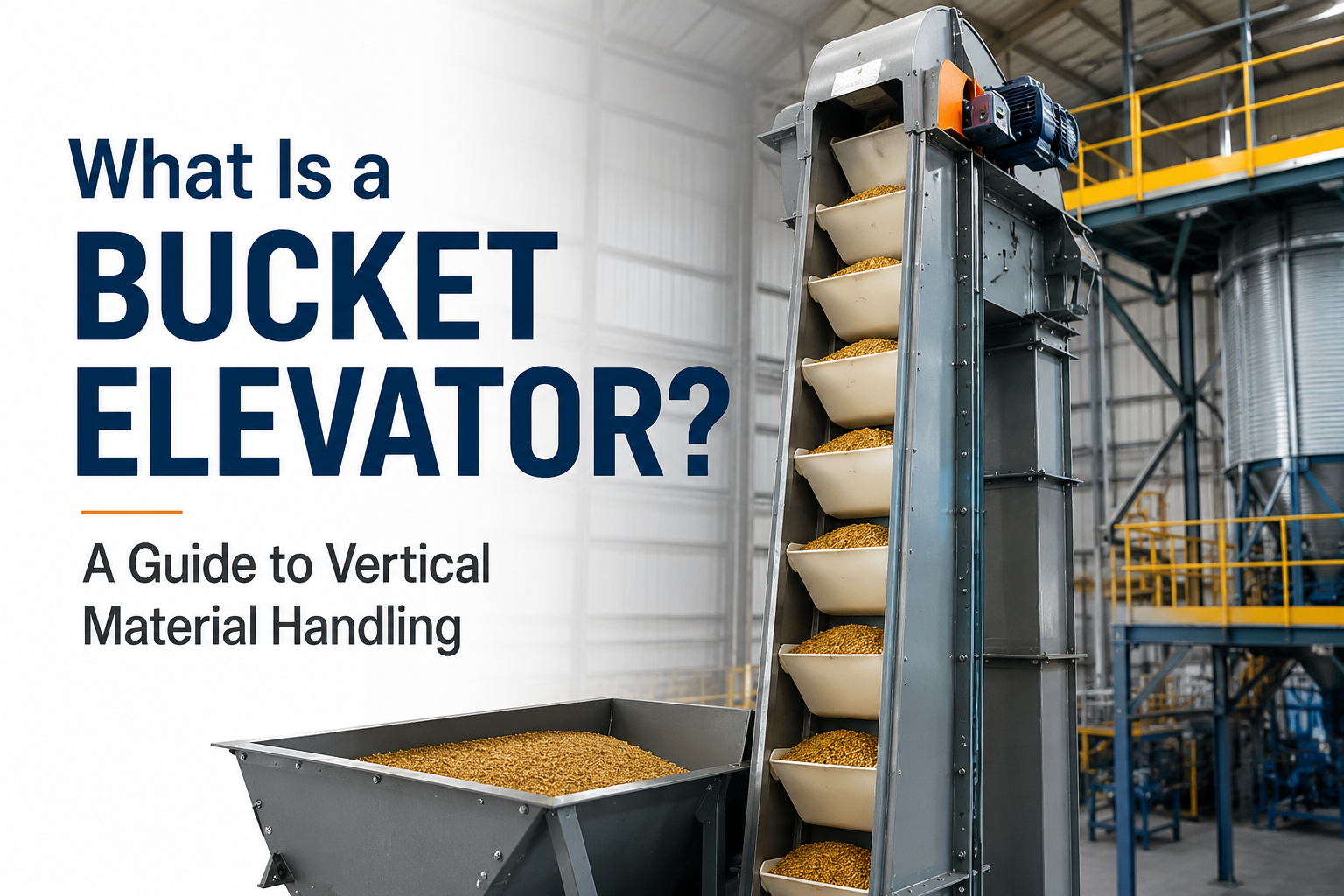
The bucket elevator is an equipment for lifting bulk materials by means of a mechanical conveyor. As compared to horizontal conveyors that convey bulk material on a nearly even plane, the bucket elevator conveys bulk material from a lower level to a higher level.
Bucket elevators are made up of buckets, which are spaced equally in relation to each other along either a belt or chain.
The buckets are used to collect bulk materials, raise the materials in the elevator, and deliver the bulk materials at the upper end.
Since the materials are conveyed in the form of buckets, these conveyors are capable of conveying bulk materials effectively, taking much less space as compared to other conveying devices.
Modern Bucket Elevator Systems come in various capacities, speeds, elevations, and material types.
How Does a Bucket Elevator Work?
Though designs may be different, generally, bucket elevators follow the same basic principle.
Materials enter the elevator from the bottom through a feed port or loading zone. As the buckets move upwards, materials are lifted inside the buckets. The buckets get to the discharge zone, and due to the movement of the bucket elevator and the design of the buckets, the materials are discharged to other conveyors or storage tanks.
The buckets keep moving around the bucket elevator; after discharging the materials, the buckets get back to the loading zone to collect other materials.
The main components typically include:
Buckets
- Belt or chain
- Head pulley or sprocket
- Boot section
- Drive assembly
- Elevator casing or housing
- Inlet and discharge sections
- Tensioning components
Inspection and maintenance access points
The exact configuration depends on factors such as material characteristics, required capacity, elevator height, operating speed, and installation requirements.
Types of Bucket Elevators
Different applications require different elevator designs. Two important considerations are how the buckets move and how the material is discharged.
Continuous Bucket Elevator
In the continuous bucket elevator, the buckets are placed in such a way that there is continuous movement of material. In other words, the space between the buckets is minimized, which makes the design suitable for handling material in a controlled manner.
This design is usually adopted for handling material that is prone to breakage, slow-moving, or difficult to discharge at higher speeds. This design helps minimize material spillage while operating.
They are mainly considered in situations where discharge of material is needed in a controlled manner.
Centrifugal Bucket Elevator
The centrifugal design tends to run at faster speeds, and it makes use of the movement of the elevator to aid the discharge of the material from the buckets at the discharge end of the elevator.
The centrifugal design is applicable when dealing with freely flowing material such as grains. The proper spacing between the buckets, speed, and discharge arrangement will be dependent on the material type and capacity.
Vertical Bucket Elevator
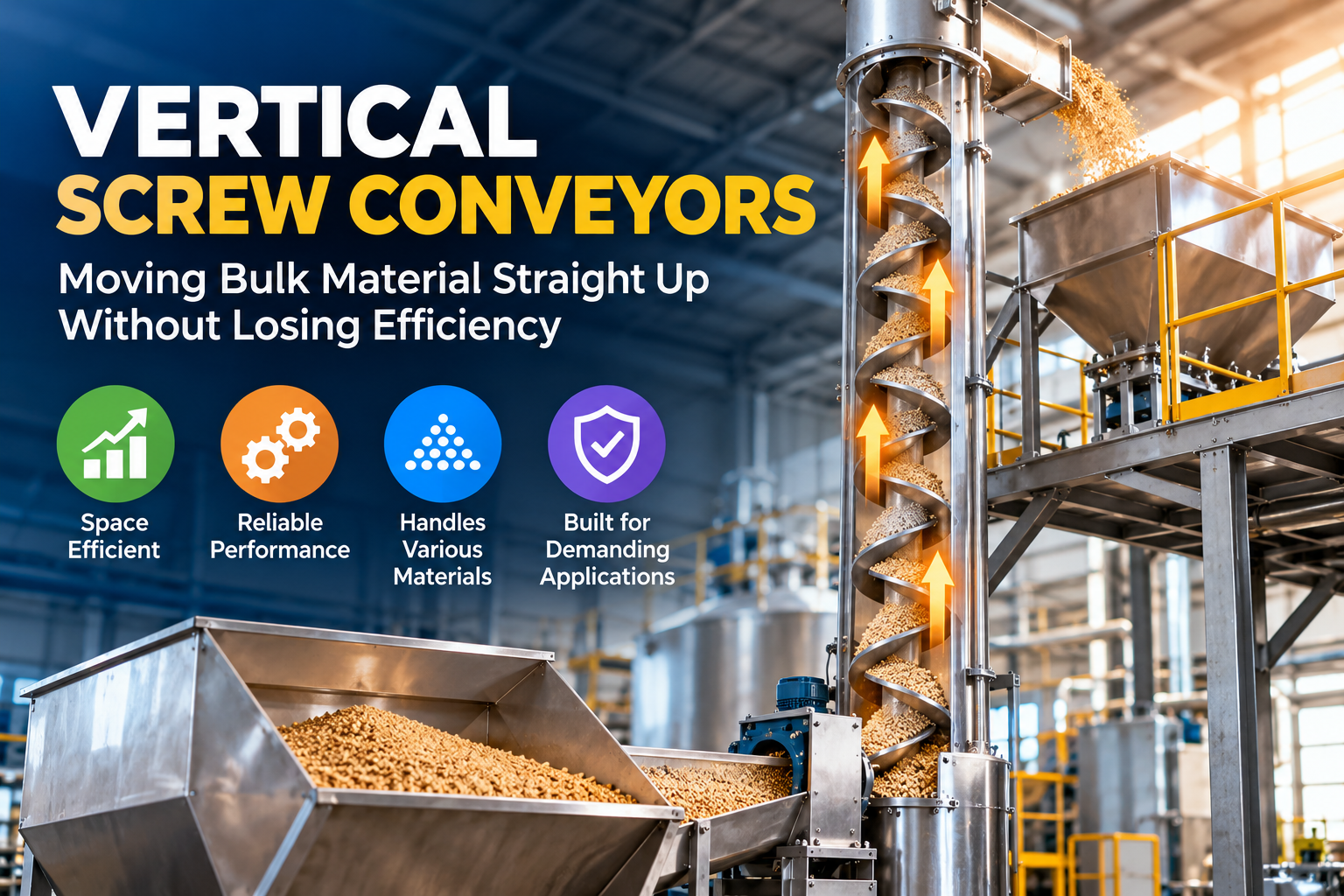
A Vertical Bucket Elevator is specifically designed to lift materials through a vertical path. This configuration is useful when a facility needs to transfer material between different levels while minimizing the amount of horizontal floor space required.
Vertical elevators can be integrated into larger material-handling systems, connecting storage, processing, packaging, and loading operations.
What Are Bucket Elevator Systems Used For?
Bucket Elevator Systems are used in many industries because they can transport bulk materials to significant heights within a relatively compact footprint.
Common applications include:
Agriculture
In the agricultural industry, bucket elevators are used to take care of grains, seeds, feedstuff, and other kinds of bulk agricultural products. Such elevators are able to connect places for intake with storage silos, processing machinery, and loading areas.
Food Processing
The food industry makes bucket elevators useful for moving raw materials and foodstuffs through the production process from one manufacturing phase to another. According to the particular purpose of usage, hygienic construction and special equipment may be necessary.
Construction Cement
Heavy-duty elevators are widely used in cement, aggregate, and other construction material applications where machinery has to deal with heavy and abrasive materials.
Mining and Extracting Minerals
In mining and mineral processing, industries require heavy-duty conveyor systems that can work under extreme conditions and with demanding materials.
Chemical and General Manufacturing
The use of bucket elevators is possible for moving powders, grains, pellets, and other raw materials in chemical and general manufacturing industries.
Advantages of Industrial Bucket Elevators
Industrial Bucket Elevators offer several benefits when vertical material transport is required.
Efficient Vertical Conveying
The primary advantage is the ability to lift bulk materials efficiently from one elevation to another. This can simplify plant layouts and reduce the need for multiple horizontal conveying stages.
Space Efficiency
Vertical conveying uses the height of a facility rather than requiring extensive floor space. This can be particularly valuable in plants where available floor area is limited.
High Throughput
Depending on the design, bucket elevators can be engineered to handle substantial material volumes. Capacity is influenced by bucket size, spacing, speed, material density, and other design factors.
Enclosed Material Handling
Many bucket elevators operate within enclosed housings. This can help contain material and reduce exposure to surrounding equipment and personnel.
Flexible Integration
Bucket elevators can be incorporated into broader material-handling systems, connecting hoppers, bins, silos, conveyors, processing machinery, and packaging equipment.
Choosing the Right Bucket Elevator Manufacturer
Selecting an experienced Bucket Elevator Manufacturer is important because elevator performance depends heavily on proper system design and sizing.
Before selecting equipment, consider the following factors:
Material characteristics: Determine whether the material is free-flowing, sticky, abrasive, fragile, dusty, or corrosive.
Required capacity: Establish the desired throughput, usually measured by weight or volume per hour.
Lift height: The vertical distance between the loading and discharge points affects the overall elevator design.
Operating conditions: Temperature, moisture, dust levels, duty cycle, and environmental conditions can influence component selection.
Bucket configuration: Bucket size, spacing, material, and shape should match the product and conveying requirements.
Discharge requirements: The way material needs to leave the elevator can influence the appropriate elevator type and operating speed.
A reputable manufacturer can evaluate these factors and develop a system based on the complete application rather than relying solely on standard equipment specifications.
When Are Custom Bucket Elevators Needed?
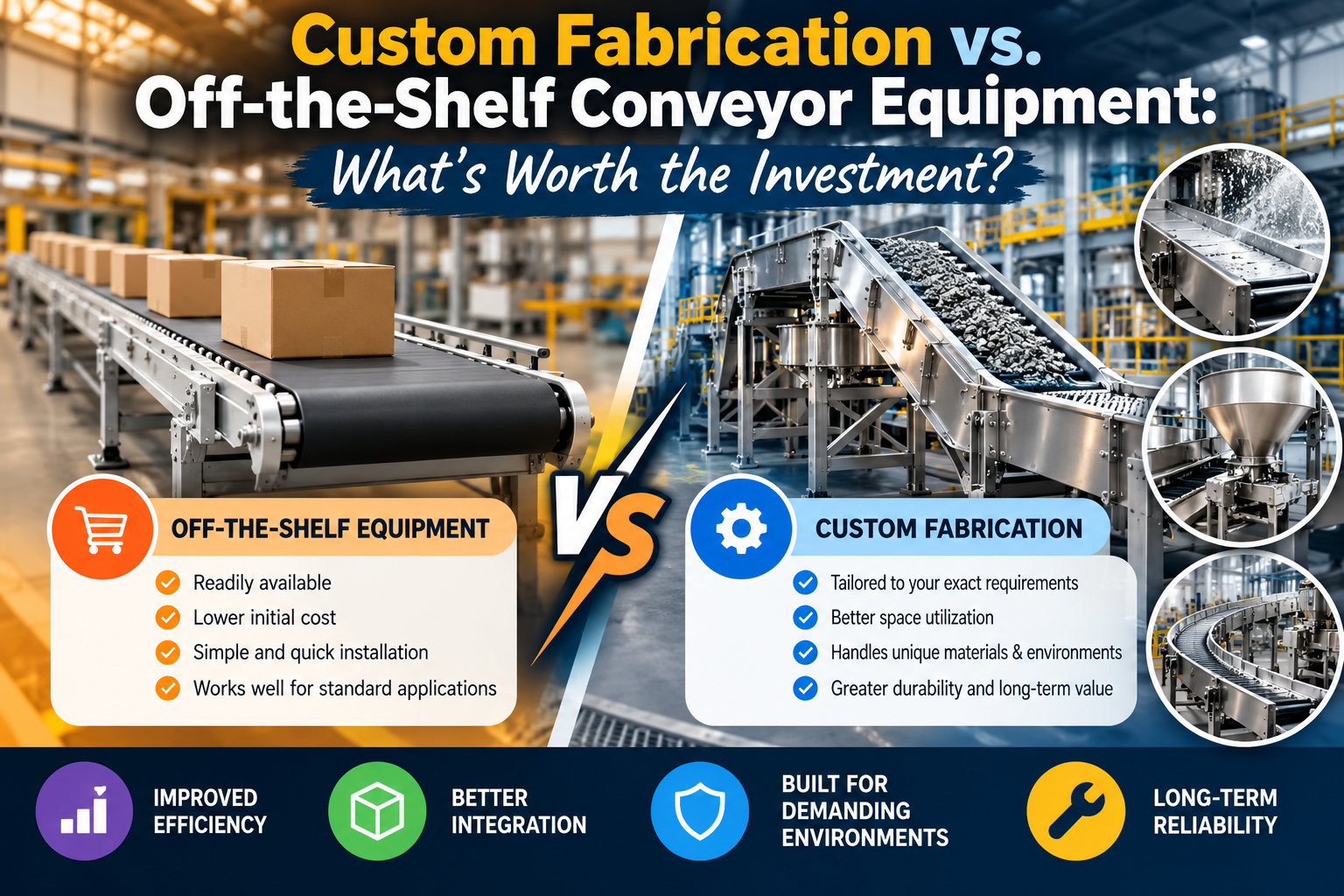
Not every facility has the same material, layout, or production requirements. Custom Bucket Elevators may be appropriate when standard configurations cannot provide the necessary capacity, dimensions, discharge arrangement, or construction.
Customization may include modifications to elevator height, bucket size, casing dimensions, inlet and discharge locations, drive systems, materials of construction, and other components.
A custom approach can also be useful when the elevator must integrate with existing equipment or fit within a specific plant layout.
Maintenance and Safety Considerations
Like any mechanical conveying system, bucket elevators require proper maintenance and safe operating practices. Regular inspections can help identify worn buckets, damaged belts or chains, loose fasteners, bearing issues, and other potential problems before they affect production.
Operators should also follow manufacturer recommendations for inspection intervals, lubrication, belt or chain tension, cleaning, and component replacement.
Because bucket elevators can operate at considerable heights and speeds, appropriate guarding, access controls, emergency stops, and other safety measures should be incorporated into the system design and operating procedures.
For applications involving combustible dust, additional engineering and safety requirements may also apply. A qualified equipment provider can help identify the appropriate considerations for the specific material and operating environment.
Final Thoughts
Bucket Elevators can be considered a good solution for vertically moving bulk materials. The system will move the materials up through the use of the buckets mounted on either a belt or chain and at the same time save much floor space.
Depending on what kind of application requires an efficient bucket elevator whether it is a continuous bucket elevator, Vertical Bucket Elevator, or something else, the appropriate system should be chosen according to material properties, capacity, lifting height, discharge point, etc.
If an application requires special attention when engineering the Bucket Elevator, it might be advisable to get in touch with an experienced Bucket Elevator Manufacturer. In addition, Bucket Elevators include Standard Bucket Elevator Systems and Custom Bucket Elevators, among others.
When considering an industrial material-handling
project, one should think about the whole process.
Looking for a bucket elevator designed around your specific requirements? Talk to an experienced bucket elevator manufacturer today.
Get a Custom Bucket Elevator Solution — Contact Us Today!