Stainless Steel Fabrication for Conveyor Systems: When Sanitary Design Matters
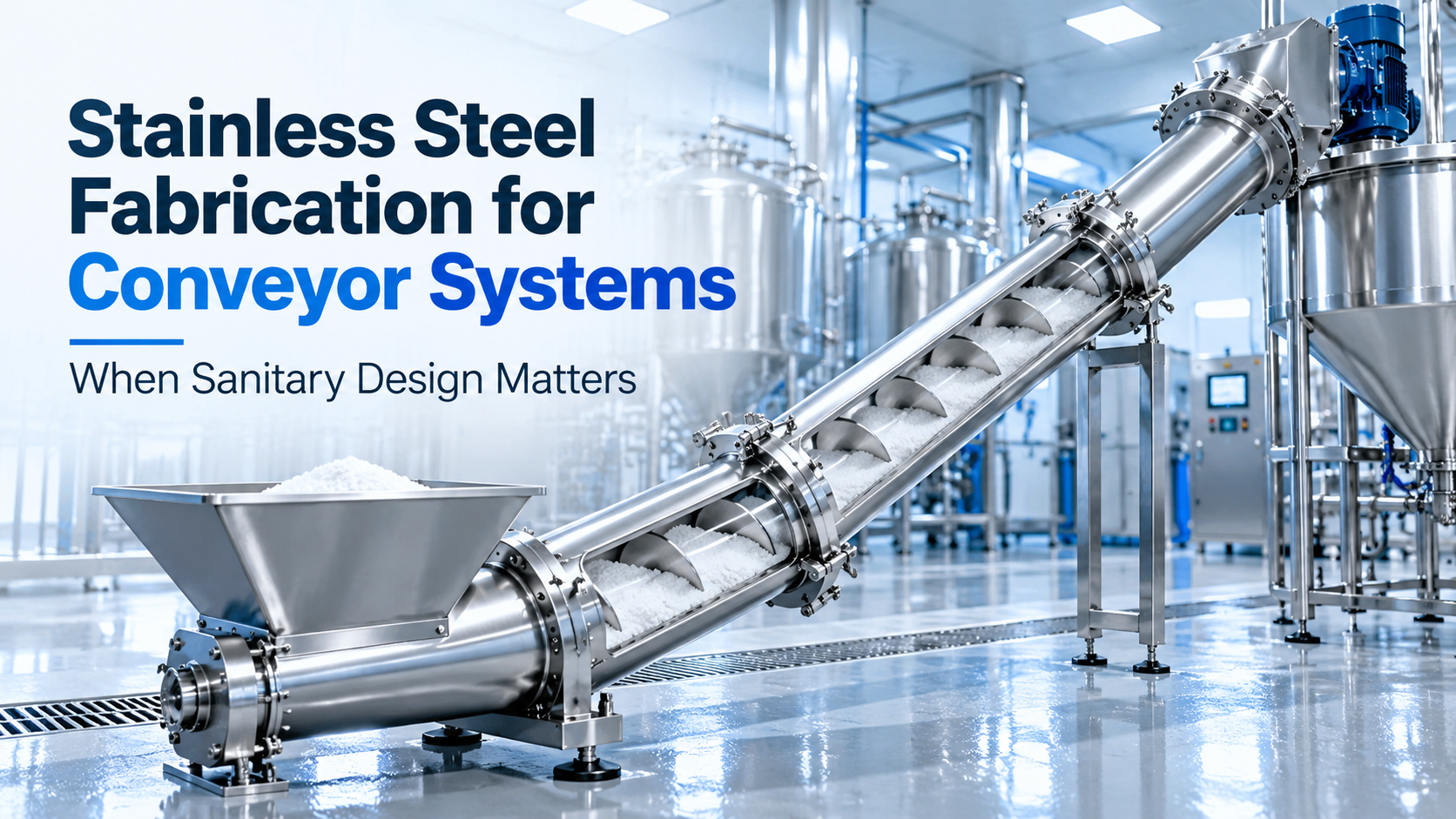
Conveyor systems in food processing, the pharmaceutical industry, chemical production, and other environments where hygiene is critical need to perform more than just transport commodities safely. Their construction must also satisfy requirements in terms of cleaning methods, resistance to corrosion, product protection, and sanitary operations.
Hence, the importance of Stainless-Steel Fabrication.
Though stainless steel does provide the necessary resistance to corrosion and durability in difficult conditions, mere construction of a conveyor system of stainless steel does not imply that it is hygienic. Equipment design, quality of welding, surface finishing, ease of access, and drainage all affect the ease of cleaning the conveyor.
As manufacturers decide on what type of conveyor to use, their understanding of the significance of designing hygienic conveyors would influence their decision on whether or not stainless steel should be considered an option.
Stainless Steel in Conveyor Applications
Stainless steel is widely used in cases where equipment will be in contact with water, cleaning agents, food, pharmaceutical products, or any other corrosive substances.
Compared to common carbon steel, stainless steel has better corrosion resistance in a number of operating conditions. Hence, stainless steel is a good material to build conveyors when they need frequent cleaning or work in a wet environment.
With proper manufacturing and finishing, stainless steel can offer a surface that is long-lasting and easy to clean.
However, the right material choice should be made based on the particular case, because different stainless steel grades possess their own characteristics. Water, chemical substances, temperatures, cleaning materials, and others will influence the choice.
What is a Sanitary Conveyor?
A sanitary conveyor is designed in such a way that it minimizes the possibility of residues, moisture, and contaminant accumulation.
This involves much more than the conveyor's exterior material.
A sanitary design may consider:
- Smooth, accessible surfaces
- Properly finished welds
- Minimized crevices and gaps
- Accessible components for inspection
- Appropriate drainage
- Easy-to-clean conveyor surfaces
- Corrosion-resistant construction
- Reduced areas where product can accumulate
- Suitable seals, bearings, and other components
- Appropriate equipment geometry
The aim is to achieve practical and easy cleaning with minimal risk of contamination or residue formation.
Equipment with a sloppy design can still be hard to clean. On the other hand, well-thought-out stainless steel manufacturing incorporates sanitary principles in the creation of a conveyor.
When Sanitary Design Matters Most
Sanitary design becomes particularly important when the conveyed material comes into direct contact with equipment surfaces, and contamination could affect product quality or safety.
Food and beverage production is an obvious example. Ingredients and finished products may pass through multiple conveying stages, creating numerous opportunities for residue to accumulate if equipment is difficult to clean.
Pharmaceutical manufacturing can have similarly demanding requirements because cross-contamination and product purity are critical considerations.
Other applications may include:
- Food ingredients
- Prepared foods
- Agricultural products
- Nutraceuticals
- Pharmaceutical powders
- Personal-care products
- Chemical products
- Wet or corrosive bulk materials
The required level of sanitation depends on the product, process, facility, cleaning program, and applicable standards.
Flex Screw Conveyors in Sanitary Applications
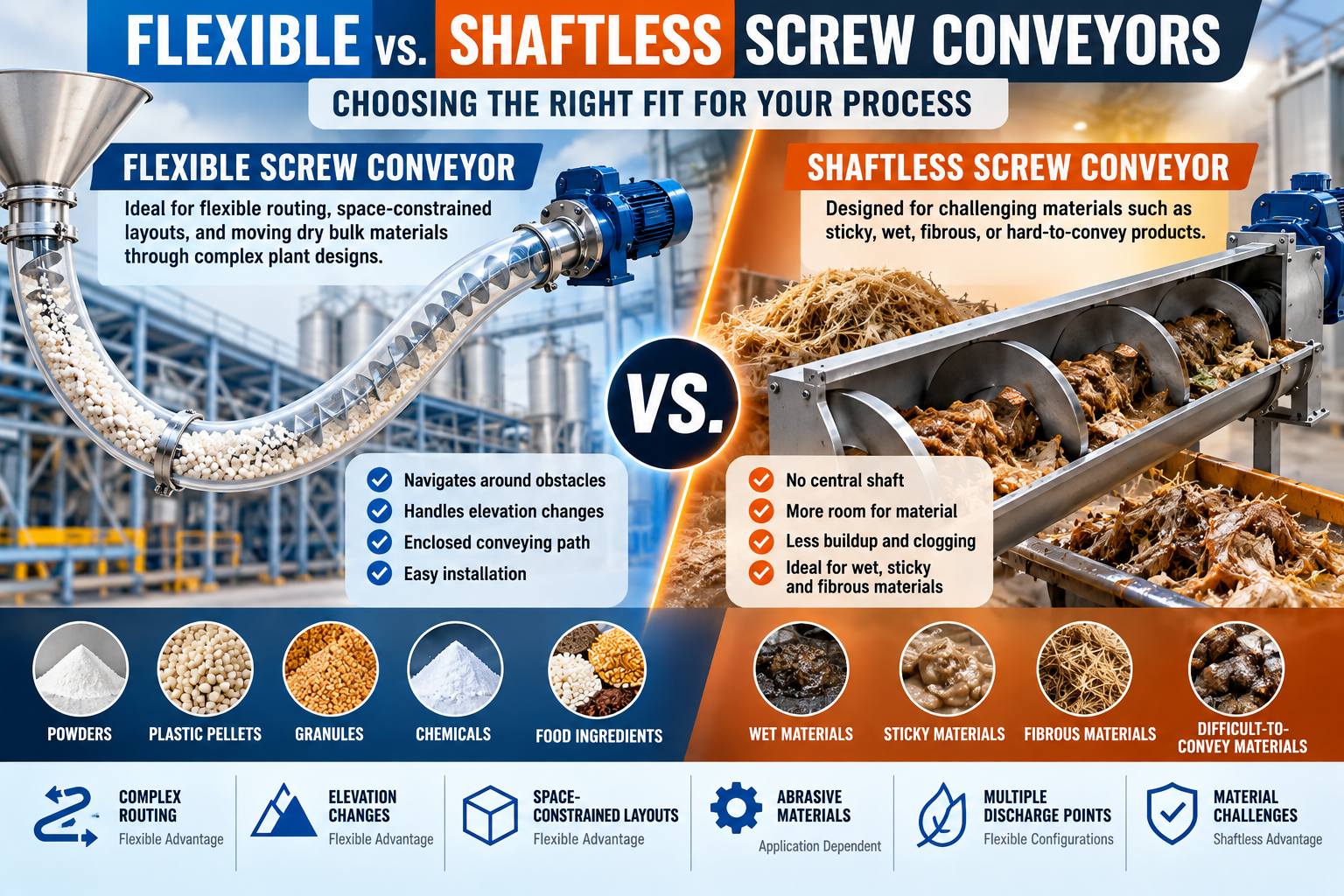
A flex screw conveyor can be an effective solution for moving dry bulk materials through facilities where flexible routing and enclosed conveying are beneficial.
These systems generally use a rotating flexible screw inside a tube. The enclosed conveying path can help contain material during transport while allowing the system to be routed around existing equipment.
When sanitary requirements are important, the conveyor's construction and accessibility should be evaluated carefully.
Questions to consider include:
- Can the conveying tube be adequately cleaned?
- Can product-contact components be removed or accessed?
- Are there areas where material can accumulate?
- Are connections and transitions designed to minimize contamination risks?
- Is the selected stainless steel appropriate for the cleaning environment?
The answer will depend on the specific conveyor configuration and process requirements.
Spiral Screw Conveyor Design and Sanitation
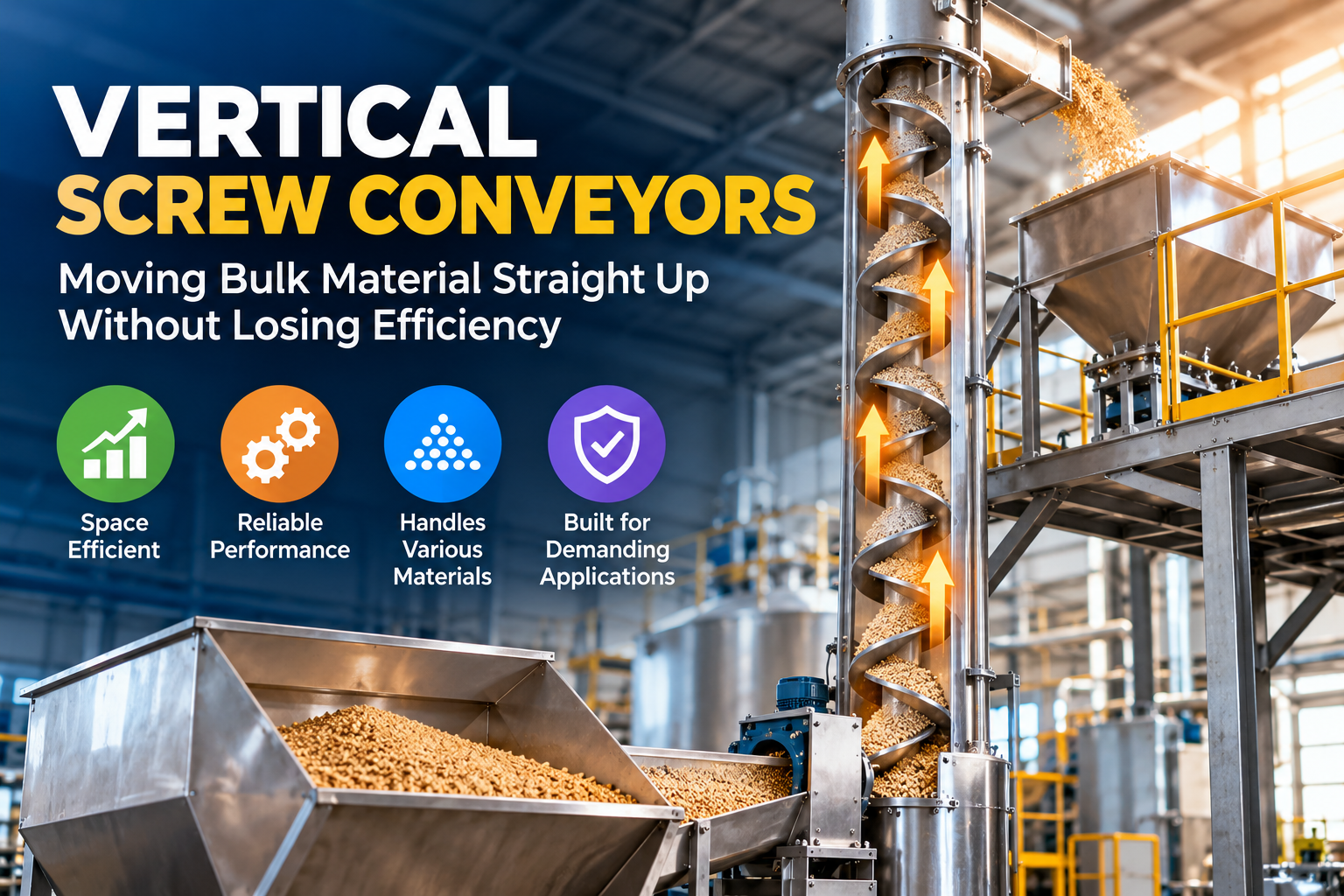
A spiral screw conveyor can provide an efficient method of moving bulk materials through a controlled conveying path. Spiral screw designs are available in a variety of configurations, including systems engineered for specific material characteristics and process requirements.
For sanitary applications, the screw and surrounding housing should be considered together.
Product-contact surfaces need to be accessible enough for the facility's cleaning and inspection procedures. The design should also minimize unnecessary ledges, crevices, and areas where material or moisture can remain after cleaning.
A properly engineered stainless steel spiral screw conveyor can therefore combine material-handling performance with construction suited to hygiene-sensitive environments.
Portable Flexible Screw Conveyors
Some facilities need conveying equipment that can be moved between production areas or positioned near different processing stations.
A portable flexible screw conveyor can provide this type of operational flexibility.
Portable systems can be useful for facilities with multiple product lines, temporary material-transfer needs, or frequently changing production processes.
However, portability should not come at the expense of sanitation.
The frame, wheels, connections, conveying tube, product-contact components, and surrounding surfaces should all be evaluated for cleanability. If the equipment is moved between different products or production areas, the cleaning procedure becomes particularly important.
A stainless steel portable configuration can provide a practical combination of mobility, durability, and cleanability when appropriately designed for the application.
Stainless Screw Conveyor Construction
A stainless screwconveyor can be an excellent option for applications requiring corrosion resistance and cleanable product-contact surfaces.
Depending on the application, stainless steel may be used for the screw, trough, housing, covers, supports, or other components.
However, stainless construction should be paired with appropriate fabrication practices.
Welds should be properly executed and finished where required. Surfaces should be free from unnecessary irregularities that could trap product or cleaning residue. Components should also be arranged to provide reasonable access for inspection and maintenance.
These details can have a significant effect on long-term equipment performance.
Stainless Steel Fabrication Is About More Than Material
The term Stainless Steel Fabrication can sometimes create the impression that simply selecting stainless steel solves the sanitation challenge.
It does not.
Fabrication quality and design are equally important.
As an illustration, a stainless steel conveyor with inferior weld quality, inaccessible interiors, or unnecessary crevices will be hard to clean despite its corrosion-resistant construction.
On the other hand, a well-built system may incorporate the materials, welds, finishes, positioning, and equipment design as part of the overall sanitary design process.
This explains why it is important for the manufacturer to consult the conveyor fabricator regarding the cleaning method that will be used.
Cleaning and Maintenance Should Influence Design
Manufacturers should think about cleaning and maintenance before purchasing a conveyor—not after installation.
Consider how the equipment will be cleaned:
- Will it be dry cleaned?
- Will it undergo wet washdown?
- Will cleaning chemicals be used?
- How frequently will sanitation occur?
- Does the equipment need to be disassembled?
- Which components require routine inspection?
- How quickly must the conveyor return to service?
These requirements can influence material selection, surface finish, seals, bearings, connections, and overall equipment geometry.
Designing around the cleaning process can help reduce maintenance complications and make sanitation more consistent.
Custom Stainless Steel Fabrication for Conveyor Applications
Every sanitary processing environment has its own requirements.
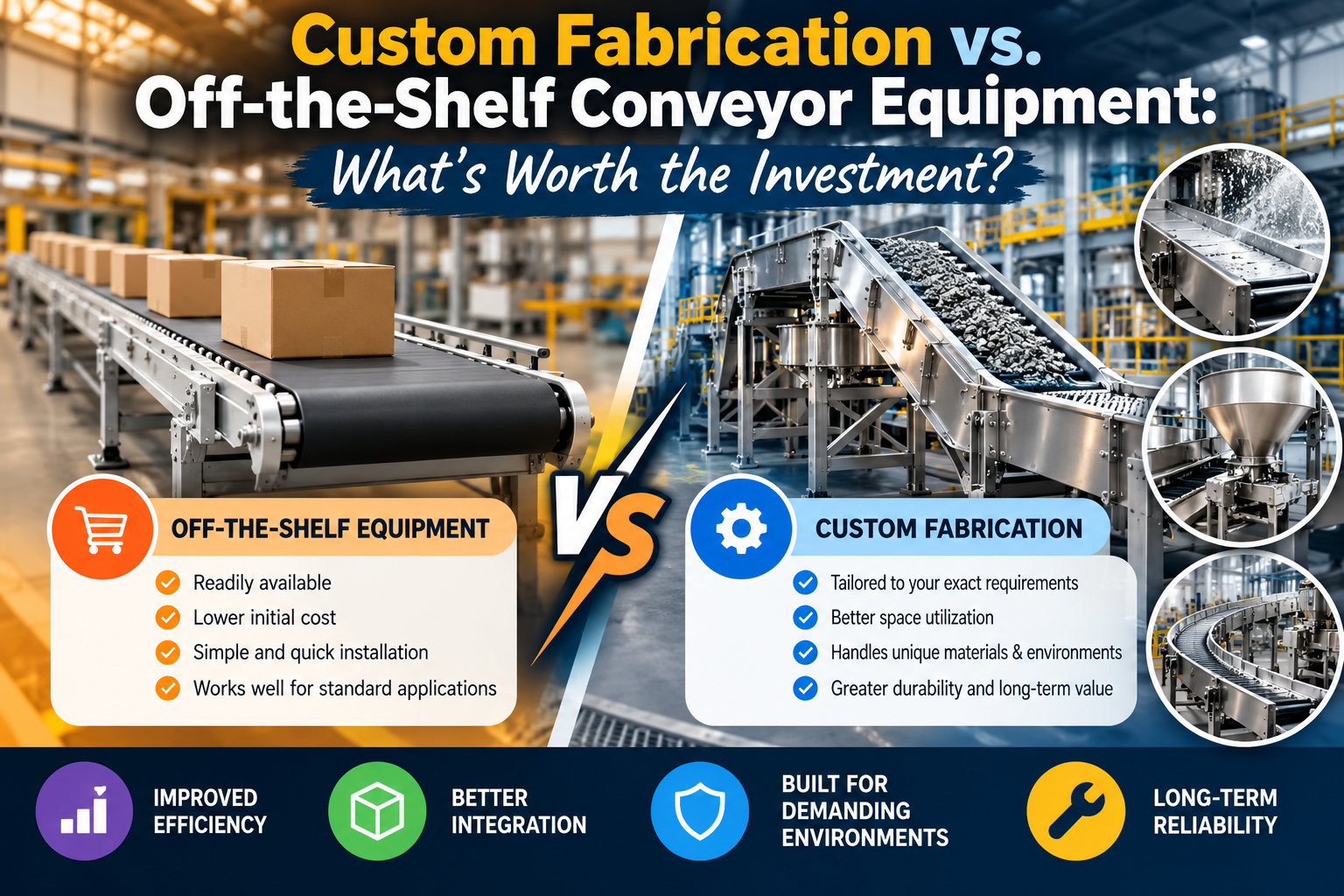
A facility may have restricted space, unusual conveyor elevations, specific discharge points, existing equipment, or specialized cleaning procedures. Standard conveyor equipment may not always accommodate those conditions without significant modification.
Custom Stainless Steel Fabrication can provide a way to address those requirements from the beginning.
Custom fabrication may include stainless steel screw conveyors, feeders, chutes, supports, hoppers, covers, and other material-handling components. Dimensions and configurations can be developed around the facility's layout and process requirements.
Conveyors, Inc. provides screw conveyor and feeder solutions in standard CEMA sizes or customized sizes for use in special material-handling applications by manufacturing companies.
Is It Worthwhile to Invest in Stainless Steel?
If one of the major concerns in your application is preventing corrosion, easy cleaning, and maintaining cleanliness, then it becomes worthwhile to invest in stainless steel. But the best results come from combining appropriate stainless steel construction with sound sanitary design principles.
A flex screw conveyor, spiral screw conveyor, portable flexible screw conveyor, or stainless screw conveyor can all serve useful roles depending on the material and process. The right choice should be based on the complete application rather than the conveyor name alone.
Ultimately, sanitary conveyor design is about creating equipment that can reliably perform its material-handling function while also supporting the facility's cleaning, maintenance, and product-quality requirements.
When sanitation matters, Stainless Steel Fabrication is not simply an upgrade in material. It is an opportunity to design the conveyor around the realities of the production environment from the first weld to the daily cleaning process.