Conveyor Bearings 101: Why the Right Bearing Extends Equipment Life
Conveyorbelts function in a difficult environment. They can be used in handling abrasive minerals, farm produce, chemicals, food ingredients, and many other forms of bulk material transport. Despite operating in such conditions, conveyor belts normally function in a high-speed and heavy-duty environment for prolonged periods of time. One part that greatly contributes to efficient functioning of these conveyor belts is the bearing.
Appropriate selection and maintenance of the conveyor belt bearing are essential for ensuring proper functioning of conveyor belt parts. In case the incorrect bearing is chosen or the bearing is worn out, contaminated, or poorly lubricated, serious problems may occur.
Being aware of bearing properties and conditions under which bearing service becomes necessary is important for facility management.
What Are Conveyor Bearings?
Bearings are a kind of mechanical device made to support any rotating or moving parts. They can reduce friction.
In conveyors, bearings can be used to support shafts and rotating devices.
Depending on the design and use of the conveyor system, bearings can come across dust, moisture, abrasive materials, heat, heavy loads, and constant operating cycles. These factors make the process of picking the right type of bearing very important.
The bearing selected must be able to withstand the load and working conditions that correspond to a certain conveyor. A bearing made for light purposes will not be able to withstand the requirements of heavy-duty machinery.
Why Conveyor Bearings Matter
Bearings may be relatively small compared with the overall conveyor, but their performance can have a significant effect on system reliability.
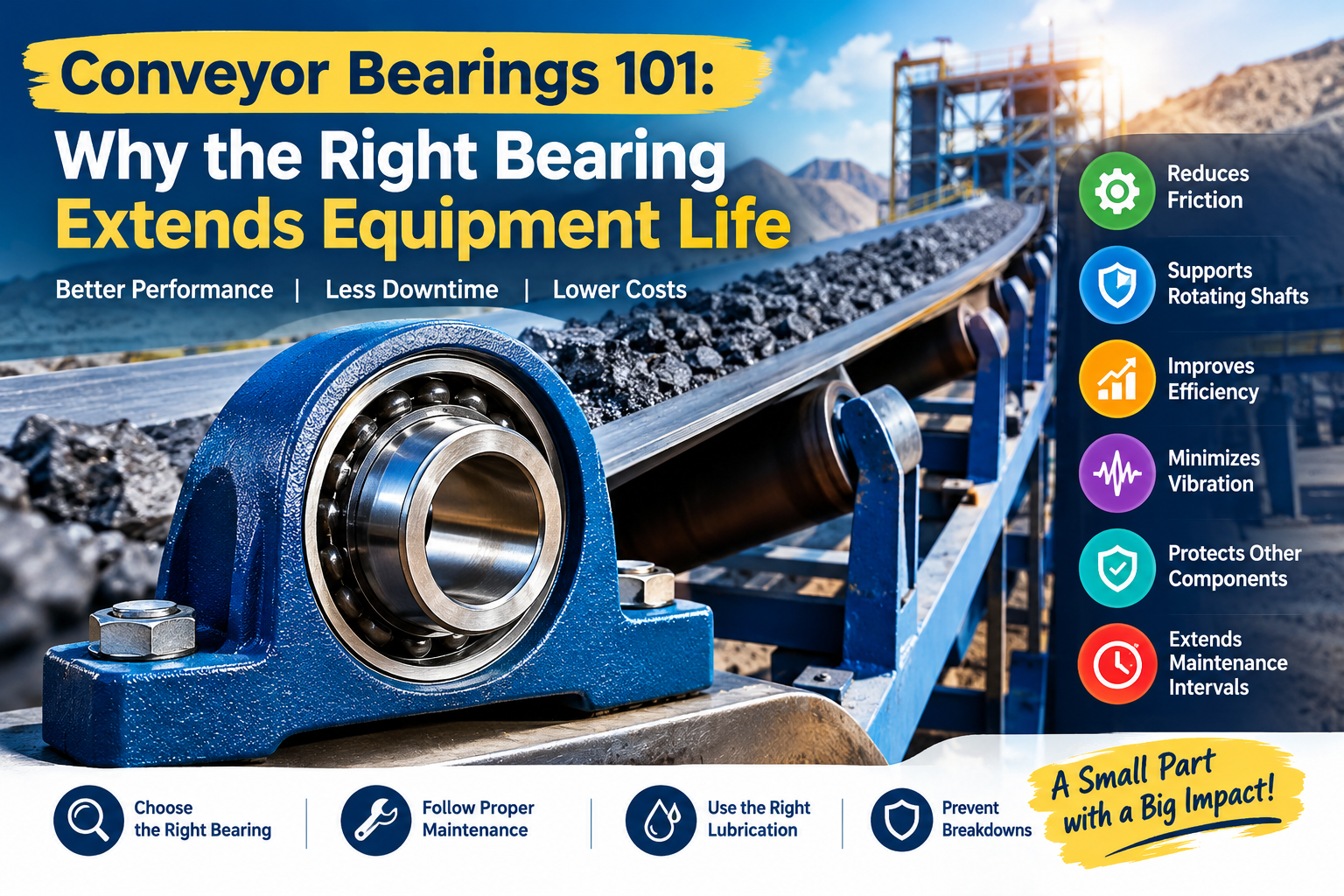
Properly selected conveyorbearings can help:
- Reduce friction during operation
- Support rotating shafts and components
- Improve equipment efficiency
- Reduce vibration and mechanical stress
- Protect other conveyor components from unnecessary wear
- Support consistent conveyor performance
- Extend maintenance intervals when properly maintained
When a bearing begins to fail, however, the effects can spread beyond the bearing itself. Increased friction and heat can place additional stress on shafts, seals, couplings, motors, and other components.
Choosing the Right Bearing for the Application
It is important to know that not all types of bearings are suitable for the same operating conditions. When choosing a bearing for the conveyor, one needs to take into account certain factors.
Load Capacity
The bearing should have a high load capacity to withstand the radial and sometimes axial loads. Heavy-duty conveyors might need special bearings that can handle a lot of load and work continuously.
Speed of Operation
All the parts of the conveyor rotate at different speeds based on its design. One needs to choose a bearing based on its speed of operation.
Environmental Conditions
Dust, moisture, chemicals, abrasives, and temperatures influence the operation of bearings in different ways. If the conveyor moves dusty bulk materials, then a different type of protection is needed.
Lubrication Needs
Appropriate lubrication reduces friction and helps control the heat. A lubricant is chosen based on the bearing's type and environmental conditions.
Configuration of Shaft and Housing
The bearing should fit the shaft and the housing of the conveyor. Improper installation of the bearing may lead to its early wear despite its proper choice.
Common Signs of Bearing Problems
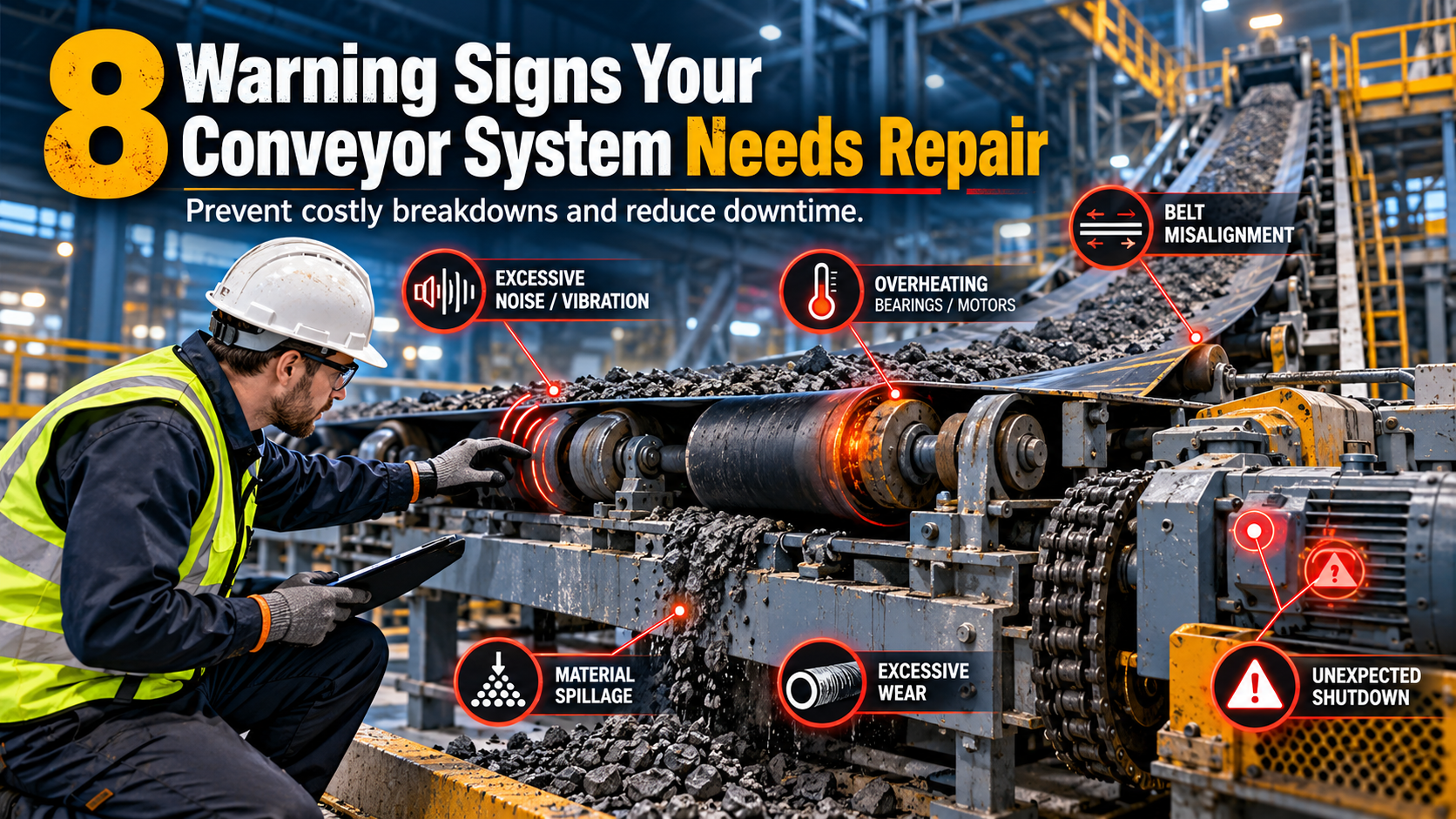
Detecting early warning signs is a way of preventing an unforeseen stoppage of the conveyor.
An example of such a signal is any unusual noise coming from the machine. The grinding sound, squeaking, clinking, and other sounds may be an indication of a worn-out or incorrectly lubricated bearing.
Another important warning sign is any excessive vibration. The wearing out of the bearing may cause the vibration affecting the neighboring parts of the conveyor.
Heat is another warning sign. An overly warm bearing may experience excessive friction, inadequate lubrication, contamination, misalignment, and overloading.
Other warning signs can include:
- Increased power consumption
- Shaft movement or looseness
- Visible bearing damage
- Grease leakage or contamination
- Repeated bearing failures
- Reduced conveyor performance
When these symptoms appear, the conveyor should be inspected rather than simply operated until the bearing fails completely.
How Bearing Maintenance Extends Conveyor Life
Proper maintenance is one of the best methods of ensuring proper protection of the bearing as well as other parts around it.
The bearing should be inspected by the maintenance team as per the recommendations of the manufacturer and the conditions under which the equipment operates. It is important to lubricate the bearing properly with the right kind of lubricant.
Cleaning of the bearing is also critical. There are instances where contaminants find their way into the bearing assembly and lead to increased wearing off of the bearing.
Proper alignment should also be carried out if required since misalignment leads to increased loads being placed on the bearing.
In any case, a proper maintenance process ensures that the worn out bearing is replaced before it causes further damage.
When to Contact a Conveyor Repair Company
While some problems with bearings can be solved using maintenance techniques, others will need the professional services of inspection and repair companies.
The expertise of a Conveyor Repair Company can help identify the source of recurring bearing failure, which could range from incorrect bearing specification, bearing installation, misalignment, poor lubrication, overload, contamination, or something else.
The replacement of the bearing may not always be the solution. When the same bearing fails again and again, the entire assembly of the conveyor needs to be investigated to find out the reason.
Repair services can also be of use for damaged shafts, housings, seals, drives, and other parts of the machinery due to a bearing failure.
Conveyor Bearings and Total Equipment Cost
Selecting a bearing strictly by its original purchase price is not necessarily a good guide for choice. In such instances, a cheaper bearing that constantly breaks down will end up being more expensive to replace due to repair costs, lost productivity, and other issues.
Buying the correct conveyor bearing for your system may lead to increased lifespan and easier maintenance. The correct bearing must be considered within the context of the entire conveyor system rather than as just a replacement.
For heavy industry, consideration of the full environment is important.
Protect Your Conveyor Investment
The proper selection, installation, lubrication, and maintenance of conveyor bearings is crucial in determining how efficient a bulk material handling system will be in terms of performance and longevity. Proper handling, lubrication, and regular inspection of early warning signals could save you from bearing failures.
Whenever bearing issues arise, working together with a reputable Conveyor Repair Company would enable you to diagnose the root cause and come up with the right repair/replacement solutions.
Conveyors Inc. supplies industrial conveyor equipment, replacement parts, and material handling systems. The combination of well-chosen materials along with proper maintenance could help your facility run its conveyor equipment more reliably.
Do not let bearing failures disrupt your production process. Proactive inspection and maintenance of conveyor bearings could go a long way towards extending your machinery’s lifespan and efficiency.